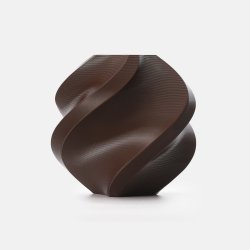
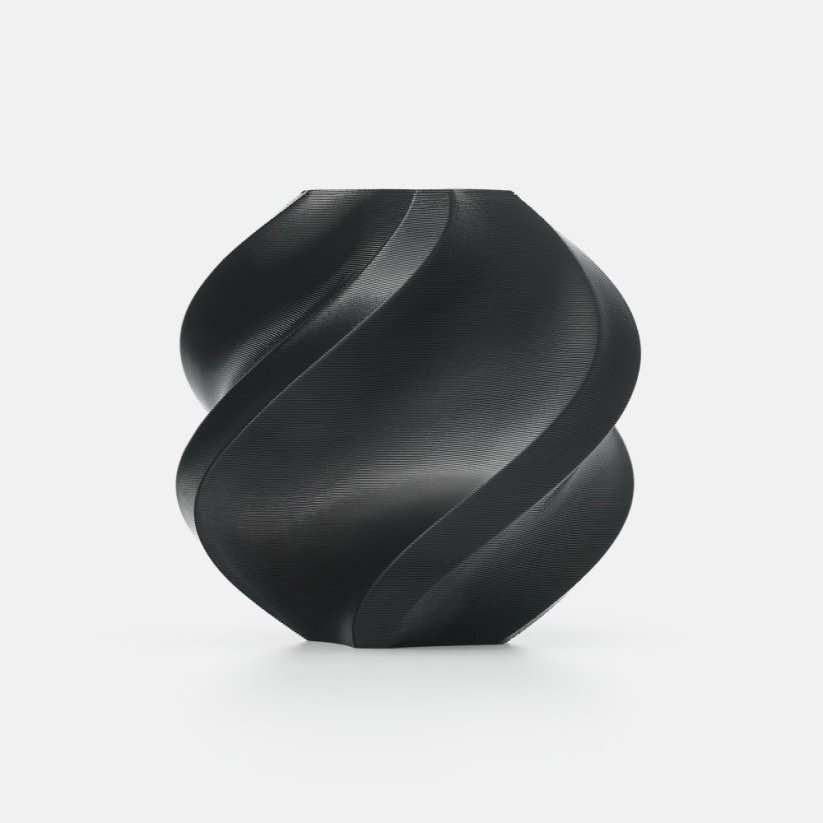
Bambu Lab TPU 90A 1.75 mm with spool, 1kg | Black
Flexible TPU 90A filament from Bambu Lab, 1.75 mm diameter on a reusable high-temperature 1 kg spool, combining elasticity with higher structural strength.
✔️ Shore hardness 90A - flexibility and structural integrity
✔️ Excellent impact resistance and shock absorption
✔️ Multi-material printing with PLA and PETG (H2D / H2C)
✔️ Print temperature 210-230 °C, bed 35-45 °C
✔️ Compatible with AMS HT, requires drying before printing
✔️ Recommended nozzles 0.4 / 0.6 / 0.8 mm
✔️ Prints on PEI plate without adhesive
✔️ Suitable for soles, RC tires, gaskets, and damping parts Show more
Flexible TPU 90A filament from Bambu Lab, 1.75 mm diameter on a reusable high-temperature 1 kg spool, combining elasticity with higher structural strength.
✔️ Shore hardness 90A - flexibility and structural integrity
✔️ Excellent impact resistance and shock absorption
✔️ Multi-material printing with PLA and PETG (H2D / H2C)
✔️ Print temperature 210-230 °C, bed 35-45 °C
✔️ Compatible with AMS HT, requires drying before printing
✔️ Recommended nozzles 0.4 / 0.6 / 0.8 mm
✔️ Prints on PEI plate without adhesive
✔️ Suitable for soles, RC tires, gaskets, and damping parts Show more
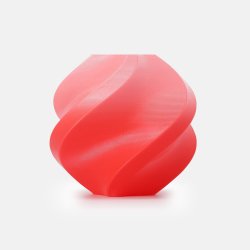
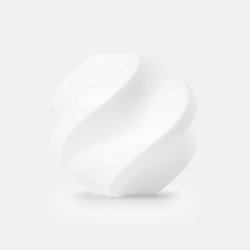
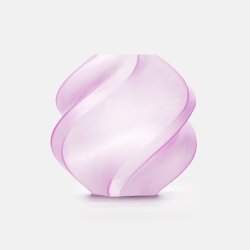
Product variants
Bambu Lab TPU 90A is a flexible thermoplastic polyurethane with a Shore hardness of 90A, designed for printing durable and resilient parts with high impact resistance. The 1.75 mm filament in a 1 kg pack on a reusable high-temperature spool combines structural strength with elasticity.
Key features
TPU 90A belongs to the family of flexible materials in the TPU and flexible filaments range. Thanks to its 90A hardness, it offers higher structural integrity than softer variants while maintaining excellent flexibility. It excels in wear resistance and the ability to absorb impacts even after repeated bending.
It is the only one in the range to support multi-material printing with PLA and PETG filaments via beam interlocking in Bambu Studio (only on dual-nozzle H2D and H2C printers). The spool is made from a high-temperature resistant material and can be repeatedly dried directly in drying boxes.
Technical parameters / specifications
| Parameter | Value |
|---|---|
| Filament diameter | 1.75 mm (+/- 0.05 mm) |
| Spool weight | 1 kg |
| Shore hardness | 90A |
| Nozzle temperature | 210-230 °C |
| Bed temperature | 35-45 °C |
| Recommended print speed | default (do not increase max. volumetric speed) |
| Recommended layer height | 0.1-0.28 mm |
| Recommended nozzles | 0.4 / 0.6 / 0.8 mm |
| Build plate | Smooth PEI or Textured PEI |
| Adhesive | not required |
| Drying (before printing) | 70 °C / 8 h (dryer), 75 °C / 18 h (AMS HT) |
| AMS compatibility | AMS HT (NOT classic AMS, AMS lite, AMS 2 Pro) |
| Flow Dynamics Calibration | turn off (parameters are preset) |
Who is Bambu Lab TPU 90A 1.75 mm with spool, 1 kg suitable for
This filament is intended for functional parts that must combine flexibility with mechanical durability. Typical applications include shoe soles, RC model tires, gaskets, rubber stoppers, tool grips, vibration-damping components, protective cases, helmet padding, and seat cushions.
Thanks to the option of multi-material printing with PLA and PETG on compatible printers, rigid and flexible sections can be combined in a single part - for example handles, padding, or parts with functional damping. The material is suitable for advanced users, as printing flexible filaments requires precise settings and slower extrusion.
Tips for use
- Always dry the filament before printing - TPU is hygroscopic and moisture degrades print quality.
- Keep the default print speed, do not increase the max. volumetric speed.
- Turn off Flow Dynamics Calibration - the parameters are preset by the manufacturer.
- On X Series / P Series printers, do not activate the Unload function when changing filament - there is a risk of clogging the extruder with uncut TPU residue.
- Heat the nozzle to 250 °C and pull the filament out manually after retraction. On the H2 Series, auto-retraction via Unload is allowed.
- When printing TPU frequently, keep the filament cutter on the right input - it wears out faster.
- For multi-material printing with supports, choose light shades of PLA to prevent pigment transfer to flexible parts.
- For the large 1 kg spool, use a larger drying box - a smaller box may not fit the winding.
- The recommended build plate is a smooth or textured PEI sheet, no adhesive is needed.
- Multi-material printing with PLA and PETG is available only on Bambu Lab H2D and H2C via the right filament input.
Room 201, Building A, No. 1 First Qianwan Road, Qianhai Shengang Cooperation Zone, Shenzhen
contact@bambulab.com
Hanauer Landstraße 291b, 60314 Frankfurt am Main 60314 Frankfurt am Main Hanauer Landstrasse 291.
contact@bambulab.com