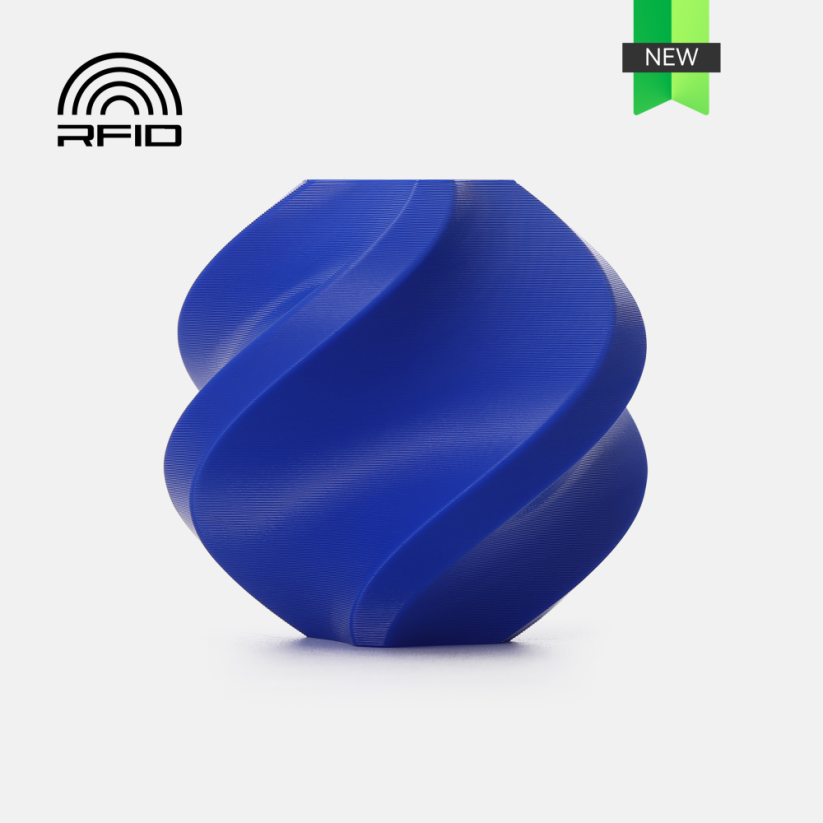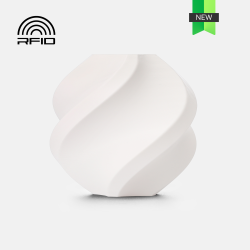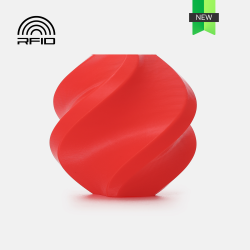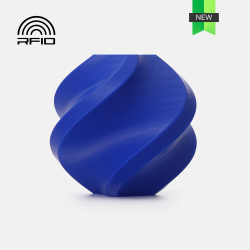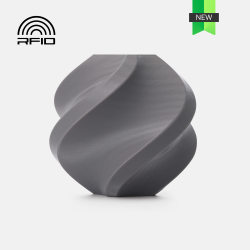
Bambu Lab filament PETG Basic with spool, 1kg | Modrá - Reflex Blue
Upgraded Bambu Lab PETG filament with strength on par with PLA and the typical toughness of PETG. Ideal for functional and outdoor prints.
✔️ Diameter 1.75 mm (+/- 0.03 mm), 1 kg spool with reel
✔️ Nozzle temperature 230-260 °C, bed 60-80 °C
✔️ Bending strength 75 MPa, impact toughness 34.2 kJ/m²
✔️ Resistant to water, UV radiation, and temperature - suitable for outdoor use
✔️ Reduced stringing and smoother surfaces thanks to the new formula
✔️ RFID chip for automatic recognition in the AMS system
✔️ Compatible with AMS, AMS 2 Pro, AMS HT, and AMS lite
✔️ Recommended drying before printing for flawless results Show more
Upgraded Bambu Lab PETG filament with strength on par with PLA and the typical toughness of PETG. Ideal for functional and outdoor prints.
✔️ Diameter 1.75 mm (+/- 0.03 mm), 1 kg spool with reel
✔️ Nozzle temperature 230-260 °C, bed 60-80 °C
✔️ Bending strength 75 MPa, impact toughness 34.2 kJ/m²
✔️ Resistant to water, UV radiation, and temperature - suitable for outdoor use
✔️ Reduced stringing and smoother surfaces thanks to the new formula
✔️ RFID chip for automatic recognition in the AMS system
✔️ Compatible with AMS, AMS 2 Pro, AMS HT, and AMS lite
✔️ Recommended drying before printing for flawless results Show more
Product variants
Bambu Lab PETG Basic is an upgraded PETG filament that combines strength comparable to PLA with the traditional toughness of PETG. It is designed for functional and structural parts that must withstand mechanical stress, moisture, UV radiation, and elevated temperatures.
Key features
The filament has been reformulated to achieve higher strength while maintaining the typical toughness of PETG. Bending strength in the XY direction reaches 75 MPa, interlayer strength along the Z axis is 56 MPa, and impact toughness is around 34.2 kJ/m². The material shows reduced sensitivity to moisture, which results in less stringing during printing and provides smoother surfaces and sharper details.
The spool includes an RFID chip that is readable by the AMS system for automatic loading of print parameters - no manual profile setup is required.
Technical parameters
| Parameter | Value |
|---|---|
| Filament diameter | 1.75 mm (+/- 0.03 mm) |
| Spool weight | 1 kg (with spool) |
| Nozzle temperature | 230-260 °C |
| Bed temperature | 60-80 °C |
| Print speed | 30-200 mm/s |
| Recommended layer height | 0.1-0.3 mm |
| Recommended build plate | Cool Plate SuperTack, Smooth PEI, Textured PEI |
| Drying before printing | 65 °C / 8 h (dryer), 80 °C / 12 h (heatbed) |
| Storage humidity | < 20 % RH (sealed with desiccant) |
| Bending strength (XY) | 75 MPa |
| Interlayer strength (Z) | 56 MPa |
| Impact toughness | 34.2 kJ/m² |
| AMS compatibility | AMS, AMS 2 Pro, AMS HT, AMS lite |
Who is Bambu Lab PETG Basic with spool, 1 kg suitable for
The material is intended for Bambu Lab printer users looking for a versatile filament for functional prints. It is suitable for structural household parts - holders, hangers, brackets, clips, and practical accessories. Thanks to its resistance to water, UV radiation, and temperature, it is also suitable for outdoor use, such as garden labels, bathroom accessories, covers, and holders exposed to daily wear. Strength comparable to PLA combined with PETG toughness allows printing of parts that do not break easily.
Usage tips
- Always dry the material before printing - if the filament has been exposed to air with humidity above 50 % for more than 72 hours, drying is essential.
- PETG adheres strongly to the PEI build plate - wait for the plate to cool down before removing the print to avoid damaging the bottom layer or the plate.
- For easier print release, you can use a release agent, such as a glue stick.
- If stringing occurs, reduce retraction and nozzle temperature - this PETG is less prone to it, but calibration is still worth the attention.
- An open chamber is usually sufficient, but for larger parts an enclosed chamber at around 25-35 °C helps with better layer adhesion.
- The RFID chip on the spool automatically transmits material information to the AMS system - no manual setup is needed.
- Store in a dry place with a desiccant to maintain consistent print results.