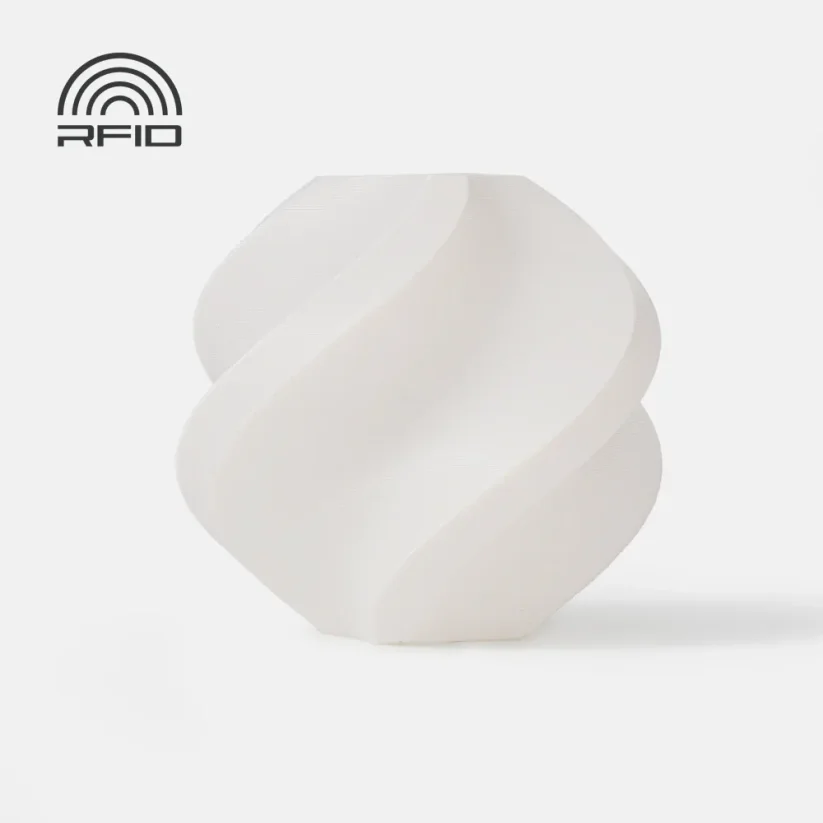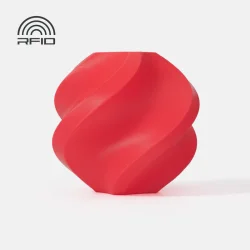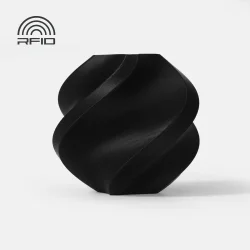
Bambu Lab Filament ASA, with spool, 1kg | Bílá
Bambu Lab ASA is a technical filament with high UV resistance, impact toughness and heat resistance up to 100 °C - suitable for outdoor and structural prints.
✔️ Diameter 1.75 mm (+/- 0.03 mm), 1 kg spool
✔️ Nozzle temperature 240-270 °C, bed 80-100 °C
✔️ Excellent resistance to UV radiation and weather
✔️ HDT 100 °C - higher heat resistance than PETG and ABS
✔️ RFID chip for automatic setup in Bambu Lab AMS
✔️ Reusable spool with high heat resistance
✔️ Suitable for enclosed printers with heated bed
✔️ Ideal for outdoor parts, automotive and functional prototypes Show more
Bambu Lab ASA is a technical filament with high UV resistance, impact toughness and heat resistance up to 100 °C - suitable for outdoor and structural prints.
✔️ Diameter 1.75 mm (+/- 0.03 mm), 1 kg spool
✔️ Nozzle temperature 240-270 °C, bed 80-100 °C
✔️ Excellent resistance to UV radiation and weather
✔️ HDT 100 °C - higher heat resistance than PETG and ABS
✔️ RFID chip for automatic setup in Bambu Lab AMS
✔️ Reusable spool with high heat resistance
✔️ Suitable for enclosed printers with heated bed
✔️ Ideal for outdoor parts, automotive and functional prototypes Show more
Product variants
Bambu Lab Filament ASA is a highly durable technical material designed for outdoor applications and structural parts. It offers exceptional UV resistance, weather resistance and high impact toughness - prints retain their properties even after long-term exposure to sun and humidity.
Key features
The material ASA (acrylonitrile styrene acrylate) is a modified variant of ABS, where butadiene is replaced by acrylate. This modification significantly improves resistance to UV radiation, oxidation and ageing, so prints do not lose their properties even after long exposure to sunlight. Bambu Lab ASA has a heat resistance (HDT) of up to 100 °C, higher flexural strength (65 MPa) and impact toughness (41.0 kJ/m²) than classic ABS.
The filament is supplied on a reusable spool with high heat resistance and contains an RFID chip, which automatically transfers print parameters to the AMS system (compatible with AMS 2 Pro, AMS HT and AMS - except AMS lite).
Technical parameters / specifications
| Parameter | Value |
|---|---|
| Filament diameter | 1.75 mm (+/- 0.03 mm) |
| Spool weight | 1 kg |
| Nozzle temperature | 240 - 270 °C |
| Bed temperature | 80 - 100 °C (with glue) |
| Print speed | up to 250 mm/s |
| Recommended layer height | 0.1 - 0.28 mm |
| Enclosed chamber | Recommended (required for large models) |
| Drying | 80 °C / 8 h |
| Print bed | Smooth PEI, Textured PEI |
| Nozzle | Hardened steel or stainless steel, 0.4 mm |
| Density | 1.05 g/cm³ |
| HDT (0.45 MPa) | 100 °C |
| Vicat softening point | 106 °C |
| Tensile strength | 37 ± 3 MPa |
| Flexural strength | 65 ± 5 MPa |
| Flexural modulus | 1920 ± 130 MPa |
| Impact toughness | 41.0 ± 2.3 kJ/m² |
| Elongation at break | 9.2 ± 1.4 % |
| AMS compatibility | AMS 2 Pro, AMS HT, AMS (AMS lite NO) |
Who is Bambu Lab Filament ASA, with spool, 1kg suitable for
ASA is a suitable choice for printing parts that are permanently exposed to outdoor conditions - mailboxes, signs, garden equipment holders, camera mounts, weather vanes, automotive exterior parts, electronics enclosures, photovoltaic mounts or garden irrigation. Thanks to its high heat resistance, it is also suitable for functional parts in automobiles, mechanical engineering or for components working near heat sources. The material is intended for more advanced users with an enclosed printer.
Tips for use
- Always print in an enclosed printer - ASA tends to warp, especially with large models and high infill.
- Before printing, we recommend drying the filament at 80 °C for 8 hours.
- Store in a dry place with desiccant, ideally in a vacuum bag - moisture degrades print quality.
- For better adhesion, use glue (Bambu Liquid Glue or glue stick) on the PEI bed.
- A pungent odour is released during printing - ensure good room ventilation.
- For large models, reduce print speed and increase bed temperature to minimise stress.
- We recommend a hardened steel or stainless steel nozzle - brass nozzles are sufficient, but less durable.
- After printing, parts can be sanded, drilled, glued and painted with common acrylic paints.