
Rosa3D Filament PLA Magic Silk 1.75, 1kg, ReFill | Mistic Tiger
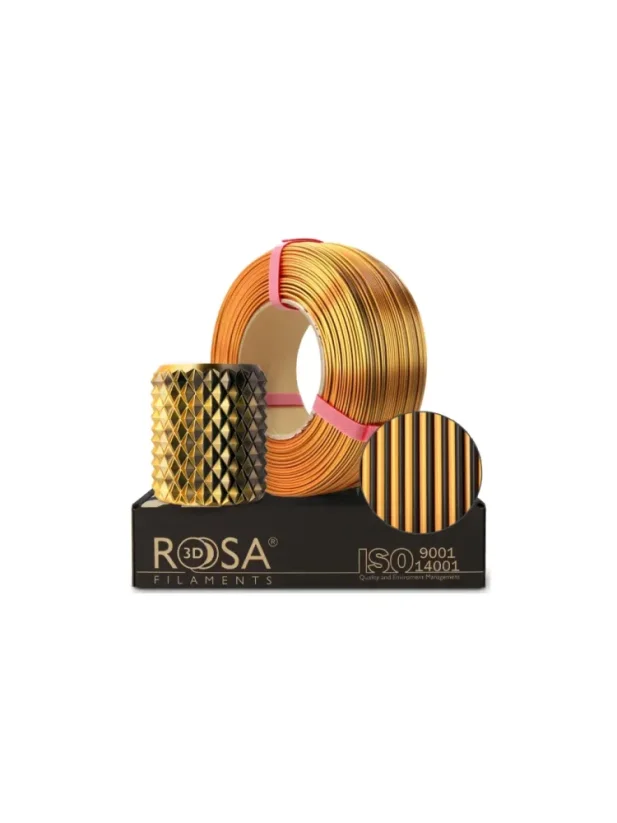
Rosa3D Filament PLA Magic Silk 1.75, 1kg, ReFill | Mistic Tiger

Dual-color PLA-Silk filament with silky gloss and color transition effect, supplied as a ReFill for the ROSA3D Masterpool spool.
✔️ Diameter 1.75 mm, 1 kg spool
✔️ Coextrusion of two colors in a single strand
✔️ High silky gloss and smooth color transition
✔️ Nozzle temperature 195-225 °C, bed 40-60 °C
✔️ Also suitable for high-speed printing (205-235 °C)
✔️ Low shrinkage and excellent layer adhesion
✔️ ReFill - plastic savings, Masterpool required
✔️ Odorless, easy to print Show more
Product variants

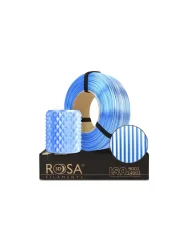
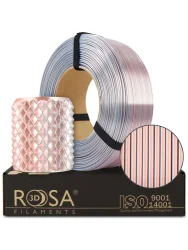
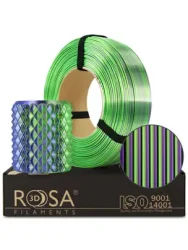
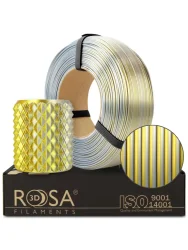
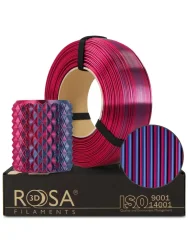
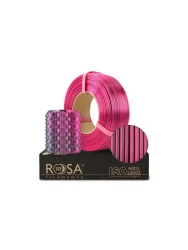
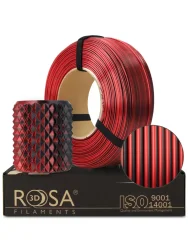

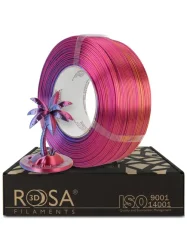

Rosa3D PLA Magic Silk ReFill is a special dual-color PLA filament with a silky gloss, manufactured using coextrusion technology. Two colors are combined in a single strand and during printing they create unique visual effects with a smooth color transition. The ReFill version is designed for repeated use with the ROSA3D Masterpool system and saves both plastic and your money.
Key features
Magic Silk is based on PLA-Silk material, which combines the easy printability of classic PLA with a distinctive silky gloss. Thanks to dual-color coextrusion, a transition effect is created that is especially visible on models with details, edges and organic shapes. The material has low shrinkage, does not emit an unpleasant odor during printing, excels in excellent layer adhesion and accurate reproduction of details.
Printing follows standard PLA profiles without the need to reduce speed, making the material suitable for high-speed printing as well. The ReFill version does not contain a plastic spool - it is only a filament winding with a small stabilizing cardboard spool (30 g). To use it, you must own the ROSA3D Masterpool system (a reusable spool).
Technical parameters / specifications
| Parameter | Value |
|---|---|
| Filament diameter | 1.75 mm |
| Base material | PLA-Silk (dual-color coextrusion) |
| Spool weight | 1 kg (also available in 0.3 kg) |
| Nozzle temperature | 195-225 °C |
| Nozzle temperature (High Speed) | 205-235 °C |
| Bed temperature | 40-60 °C |
| Cooling | 50-100 % |
| Enclosed chamber | not required |
| Recommended layer height | 0.12-0.24 mm |
| Print speed | standard PLA profile, also suitable for high-speed |
| Drying | not normally required |
| Version | ReFill (no plastic spool, Masterpool required) |
Who is Rosa3D Filament PLA Magic Silk 1.75, 1kg, ReFill suitable for
This filament will be appreciated by creators of decorative models, figurines, vases, statuettes and design objects, where the silky gloss and two-color transition stand out. Thanks to its easy printability, it is suitable for both beginners and advanced users. The ReFill package is intended for printers who already own the ROSA3D Masterpool system and want to reduce the amount of plastic waste and save money on repeated purchases. The filament is compatible with common FDM/FFF 3D printers that can process 1.75 mm filament.
Tips for use
- For maximum transition effect, choose models with organic shapes, rounded surfaces and visible edges.
- Use full cooling (80-100 %) to enhance the gloss and clarity of details.
- Before first use, install the ROSA3D Masterpool - without it, the ReFill package cannot be used.
- For high-speed printing, increase the nozzle temperature to the upper part of the recommended range (205-235 °C).
- PLA-Silk is more sensitive to moisture - store the filament in a sealed package with a moisture absorber.
- We recommend a 0.4 mm nozzle and a layer height of 0.15-0.20 mm for the optimal combination of details and gloss.
- The transition effect is best seen on models with thin walls and a visible layer structure.